Unraveling the Mystique of Poleng Cloth in Bali Guardians of Balance and Sacred Sites
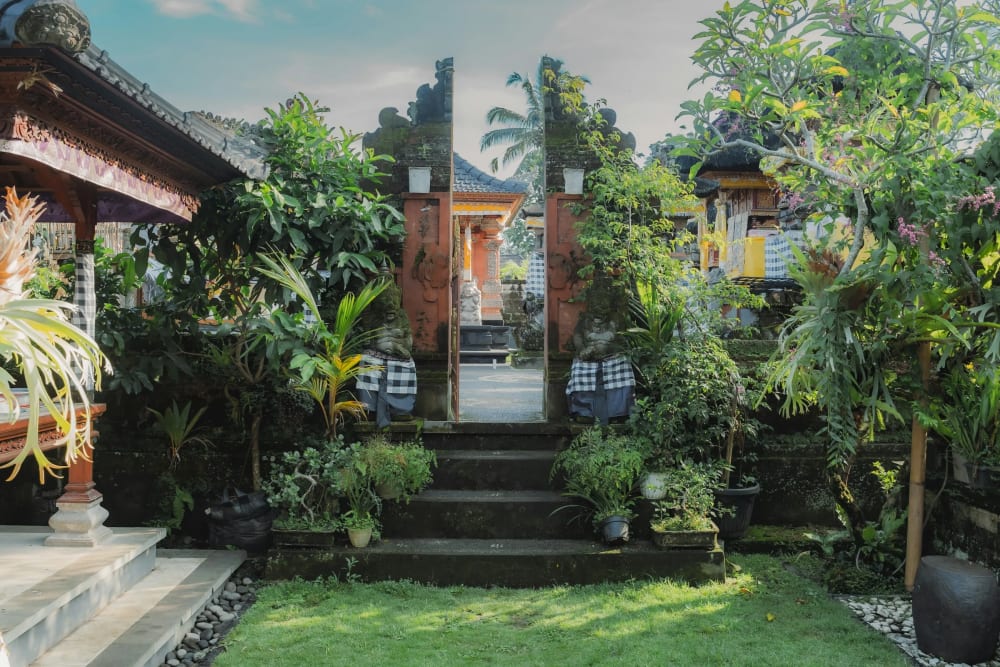
In Bali, the sight of Poleng cloth wrapped around the trunk of a banyan tree can evoke an eerie impression. This initial judgment is not entirely misguided. But what lies behind the striking black-and-white fabric, and can every tree be adorned with Polen
🌴 Quick Summary & Tips
Discover the deep symbolism behind Bali's iconic Poleng cloth, the black-and-white fabric wrapped around trees and statues to honor balance and spiritual guardians. Learn how this ancient tradition weaves together environmental protection, cultural heritage, and community unity. Explore where you can see Poleng in action and understand its role in Balinese daily life.
Furthermore, wrapping trees with Poleng cloth is an expression of gratitude to the divine for creating trees that provide numerous benefits, such as oxygen, food sources for humans and animals, and other invaluable resources. By enveloping trees in Poleng cloth, locals aim to protect them from deforestation. The application of Poleng cloth extends beyond trees to statues and other objects, safeguarding them from destruction or relocation. While Poleng cloth can be made from various materials, it is often crafted from silk, adding to its ceremonial significance. In essence, Poleng cloth epitomizes the quest for balance and harmony in life. When its philosophy is earnestly applied, equilibrium and serenity are not only pursued but also realized in daily existence. By adorning trees and objects with Poleng cloth, the Balinese not only honor their cultural heritage but also uphold their reverence for nature and the spiritual realm. In the intricate patterns of black and white, lies a profound reminder of life's intricate balance and the interconnectedness of all things.
The process of making and installing Poleng cloth is often a communal effort, involving the participation of multiple members of the local community. This collaborative endeavor strengthens social bonds and fosters a sense of unity among the people, reinforcing the collective identity and cultural heritage of Bali. The practice of wrapping trees with Poleng cloth also serves as a form of environmental conservation, as it signifies the Balinese people's commitment to preserving the natural world. By symbolically honoring and protecting trees, they demonstrate their reverence for nature and their desire to live in harmony with the environment. Moreover, the use of Poleng cloth reflects the Balinese people's deep spiritual connection to the land and their belief in the presence of unseen forces in the natural world. It is believed that by wrapping trees and other objects with Poleng cloth, they are creating a sacred space where these spiritual beings can reside peacefully, away from human disturbances.

Symbolism of Poleng Cloth: Balance of Nature: Poleng, with its balanced black and white square motif, symbolizes the natural equilibrium between opposing forces. It reflects the philosophy of Tri Hita Karana in Balinese life, which emphasizes harmony between humans, nature, and gods. Spiritual Awareness: The use of Poleng as wraps on trees, statues, and other objects signifies the spiritual awareness of the Balinese community of the existence of higher realms. It suggests that nature is not only a physical environment but also filled with spiritual energies that need to be respected and preserved. Practical and Spiritual Significance: Guardianship of Sacred Sites: Trees bound with Poleng cloth are often regarded as dwelling places for spirits or spiritual guardians. Poleng acts as a mark of respect to them and ensures the sanctity of the place is maintained through rituals and caretaking by the local community. Environmental Protection: Wrapping Poleng cloth around trees is not only an expression of gratitude to the divine but also a practical step to protect the environment. By expressing appreciation through this action, the Balinese people strive to preserve the existence of trees and their natural environment from threats such as deforestation. Cultural Preservation: The use of Poleng cloth is also an integral part of Bali's rich cultural heritage. Through this practice, traditions, beliefs, and spiritual values are preserved and passed down from generation to generation by the Balinese community.
Social and Cultural Understanding: Unity and Solidarity: The process of making and installing Poleng cloth often involves participation and cooperation from members of the local community. This creates strong social bonds and strengthens a sense of unity among them, which is an important value in Balinese culture. Acceptance and Respect for Nature: Through the use of Poleng cloth, the Balinese people demonstrate deep appreciation and respect for nature and their environment. It reflects a belief in the importance of maintaining balance and harmony between humans and nature. Thus, the use of Poleng cloth in Bali is not merely a customary or ritualistic practice but also a significant symbol of the spiritual, social, and cultural values held dearly by the Balinese people. It is a profound form of reverence for nature, spirituality, and their ancestral heritage.
