The Spiritual Artistry of Canang Sari A Reflection of Bali Cultural Depth
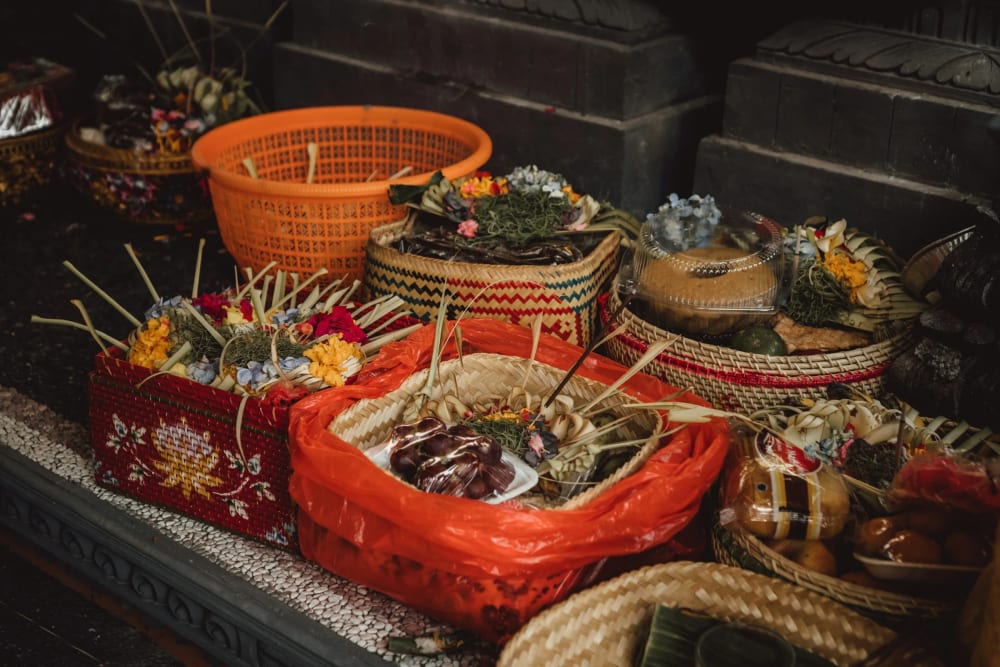
Canang Sari is one of the most familiar sights in Bali, found almost everywhere—from home entrances and temples to shop fronts, sidewalks, and even quiet street corners. Although it looks simple, this small offering carries deep meaning in Balinese Hindu life, representing gratitude, balance, and harmony in everyday living.
🌴 Quick Summary & Tips
Discover the deep spiritual meaning behind Bali's daily Canang Sari offerings, where each flower color and placement conveys prayers to the gods. This article explores how the intricate artistry blends creativity, devotion, and the philosophy of Tri Hita Karana. Learn how these small baskets reflect Bali's harmony between humanity, nature, and the divine.
Canang Sari: Bridging Creativity and Spirituality
Canang Sari is the most common form of daily offering in Bali and comes in a simple yet meaningful structure, although its shape and details can vary depending on the region, village tradition, and type of ceremony. The most typical form is a small square base made from woven young coconut leaves (janur), which serves as a container for the offerings inside. Inside this small woven tray, flowers are arranged according to color and direction, often representing balance and harmony in life. The most common arrangement includes white, red, yellow, and sometimes blue or purple flowers, each carrying symbolic meaning in Balinese Hindu belief. The offering is usually completed with a small decoration made of palm leaves on top, along with fragrant leaves such as pandan. In some cases, rice and incense are also added depending on the ritual. While the basic form remains similar, Canang Sari can differ across Bali, as each region and even each household may have its own style and tradition. These variations reflect local customs and personal creativity, while still following the core spiritual principles. In essence, Canang Sari is not only a simple offering placed in temples, homes, or streets, but also a daily expression of devotion, balance, and cultural identity. Its humble form represents the deep philosophy of Tri Hita Karana—the harmony between humans, nature, and the divine
The Symbolism of Flower Colors in Canang Sari: A Reflection of Spiritual Depth
White: White flowers symbolize purity, cleanliness, and sanctity. In Canang Sari, the arrangement of white flowers facing the East represents a plea for the purity of both the material and spiritual realms.

Red: Red signifies courage, strength, and success. Arranging red flowers facing the South symbolizes a request for the power of leadership and authority in the spiritual realm.
Yellow: Yellow represents wisdom, peace, and intelligence. Placing yellow flowers facing the West symbolizes a plea for the power of intuition in the spiritual realm.

Black or substituted with blue, green, or purple: Black represents respect, eternity, and fortune. Positioning black flowers facing the North symbolizes a request for the power to purify all forms of spiritual impurities. Rampe (pandan leaf slices): Rampe symbolizes fragrance and freshness. Placing rampe in the center of Canang Sari symbolizes a plea for the power of liberation (Moksha) in the spiritual realm. In daily practice, Canang Sari is typically made using fresh, locally available flowers that are simple yet fragrant. Commonly used flowers include frangipani (jepun), marigold (gemitir), hibiscus, and small local garden flowers that are easy to find around Bali. These flowers are chosen not only for their colors but also for their natural freshness and gentle fragrance. While rose flowers are sometimes used, they are not the most common choice in everyday Canang Sari. Instead, Balinese households and vendors usually prefer simple flowers that are easily grown locally, as the emphasis is on sincerity, freshness, and accessibility rather than luxury or decoration. The overall arrangement is simple, often mixing whatever flowers are available that day, as long as they are clean, fresh, and suitable for offering.
Understanding Canang Sari: Incense, Holy Water, and How It Is Offered
Incense, or dupa, is commonly lit beside the offering. The rising smoke is believed to carry prayers and intentions upward, connecting the human world with the divine. In ceremonies or temple rituals, holy water known as tirta is used separately to bless and purify the offerings and those involved in prayer. The act of offering Canang Sari itself is usually simple and done with sincerity. After the offering is carefully arranged, it is gently placed in its designated spot—whether on a small shrine, at the entrance of a home or shop, or in a temple area. A short moment of prayer or quiet intention follows, often accompanied by the lighting of incense. The focus is not on complexity, but on mindfulness, gratitude, and respect toward the divine and the surrounding environment. Despite its sacred meaning, Canang Sari is part of daily routine, and visitors often see it scattered across public areas. If you come across one, the most important thing is simple respect—avoid stepping on it or disturbing it. If it is placed on the ground, just walk around it carefully. Even if someone accidentally steps on it, it is generally understood as an accident rather than disrespect, as intention matters more than the mistake.